
Commercial appeal: Reims, Limoges and Laval showcase three distinct approaches

Reims
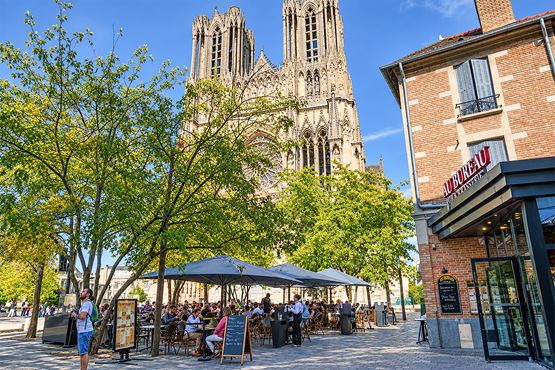
Reims boasts particularly favourable indicators. The retail vacancy rate in its city centre is around 4%, half that of comparable cities.
This vitality is underpinned in particular by a balance between independent retailers and national chains. Independents account for approximately 60% of the offering. Major brands, meanwhile, act as anchors and generate substantial footfall.
Strengthening an already well-established retail appeal
The 2025 Arthur Loyd Barometer further confirms the area's appeal. Reims ranks third among the most attractive and resilient medium-sized metropolitan areas. The ranking assesses factors including employment, higher education, transport links and urban amenities.
Against this favourable backdrop, the city continues to pursue an active prospecting strategy. It aims to identify new retail concepts and support the renewal of its offering. This ongoing monitoring helps preserve the diversity of retail businesses in the city centre.
Vincent Mansencal, Deputy Mayor, and Simon Cossiez, Director of Economic Development, report approximately one hundred new business openings each year. The city is seeking national retail brands as well as independent businesses that reflect its local identity.
The Reims Commerce pop-up shop directly supports this momentum. For one month, artisans and retailers can test their concepts with the public. Some subsequently join forces to establish a permanent presence in a retail unit.
The initiative therefore helps businesses move from experimentation to permanent establishment. It also contributes to renewing the retail offering in the heart of the city centre. Second-hand goods, reuse and locally made products are among the concepts regularly featured.
This retail momentum is complemented by significant tourist footfall. Champagne, the cathedral and major events attract visitors from France and abroad. Local representatives report 16 million visitors each year, including 5 million international visitors.
The cathedral alone welcomes nearly 2 million visitors, while the Christmas market attracts more than one million. Visitor numbers also benefit from the city's proximity to Paris and Paris Charles de Gaulle Airport.
The inclusion of the Champagne Hillsides, Houses and Cellars on the UNESCO World Heritage List has also boosted wine tourism. Alongside this growth, the hotel and restaurant offering continues to move upmarket. New luxury establishments have opened, while Michelin-starred restaurants further enhance the destination's appeal.
These developments meet tourists' expectations without overlooking those of local residents. The city is committed to maintaining an accessible offering suited to everyday needs. Retail in Reims must therefore serve both groups and encourage interaction between them.
Urban development projects support this search for balance. The Voie des Sacres connects Saint-Rémi Basilica, the cathedral and the railway station. Its redevelopment has created new outdoor terraces and introduced more greenery along the route.
Rue de Vesle remains one of the main shopping streets in the city centre. Nearby, Place Drouet-d'Erlon brings together shops, restaurants and terraces. The city's cultural and events calendar helps sustain footfall throughout the year.
New urban hubs are also taking shape. The canal banks will feature spaces dedicated to walking, leisure and dining. At Port Colbert, the redevelopment of former industrial sites is giving rise to a new neighbourhood.
The future Neoma campus will welcome several thousand students. It will complement an already internationally oriented higher education ecosystem. The Sciences Po campus in Reims is notably home to a large number of international students.
These groups are shaping new consumer needs and habits. In particular, they support the development of leisure activities, restaurants and second-hand retail.
Reims' strategy therefore focuses on making the most of its many strengths. Retail, tourism, higher education and urban development projects all contribute to the same momentum. Together, they are preparing the renewal of the city centre and the ways it will be used in the future.
Limoges
Making collaboration a driver of attractiveness
This cooperation goes far beyond promoting the area. It takes the form of a coordinated organisation designed to simplify the process for retail brands and project developers.
The three partners have notably established a monitoring unit dedicated to new retail openings. They meet regularly to share their projects, requests and initiatives. Each contributes its expertise while maintaining a shared understanding of the various cases.
Carine Eleaume, Research Officer at the Limoges and Haute-Vienne Chamber of Commerce and Industry (CCI), highlights the complementary nature of this organisation. Samuel Mamdy, Head of the Commercial Attractiveness Department at the City of Limoges, explains how it works in practice.
The City focuses primarily on the city centre, while Limoges Métropole oversees, in particular, retail hubs on the outskirts. The CCI supports businesses from their creation through to their development.
This division of responsibilities makes the process easier. When a retail brand contacts one of the partners, it quickly gains access to the entire local ecosystem. The organisations can then jointly present available premises, financial support schemes and useful contacts.
Project developers therefore benefit from a coordinated response. They can access several support schemes depending on their needs. These cover areas including commercial property, shopfront renovation and digital transformation.
A retail business incubator complements this support. It enables certain projects to test their business models and strengthen their operations during their first few years.
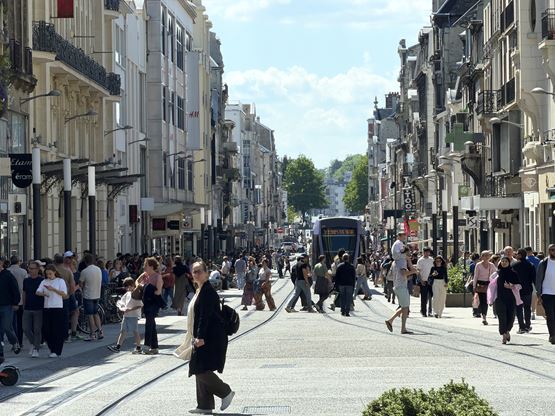
This collective momentum is also reflected in the development of the city centre. The renovation of the Halles Centrales has strengthened an iconic retail hub in the very heart of the city. The redevelopment of the Bancs district is now continuing this transformation.
The project gives more space to pedestrians, outdoor terraces and greenery. It also aims to improve connections between the different shopping streets. Urban planning is therefore becoming a tool for increasing retail footfall.
For Samuel Mamdy, the quality of the shopping experience and the routes visitors take plays a decisive role. An inviting square can naturally encourage visitors to explore neighbouring streets. Clear and accessible pedestrian routes also improve the visibility of shops and vacant retail units.
The aim is therefore to extend the shopping circuit beyond the most sought-after locations. Better visitor circulation should benefit a wider range of businesses.
Finally, this strategy forms part of a broader approach to the area. The CCI operates throughout Haute-Vienne and also supports secondary retail hubs.
Towns such as Saint-Junien can therefore promote their own opportunities to retail brands. The types of retail formats sought vary according to local catchment areas, customer profiles and community needs.
Limoges therefore highlights two complementary strengths. The first lies in its retail potential and urban transformation projects. The second is the ability of its stakeholders to work together to develop practical solutions.
Laval
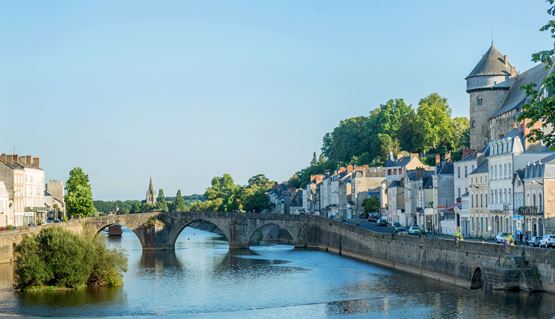
Laval benefits from a dynamic economy, supported by several major corporate headquarters. These companies attract employees, executives and families, while regularly bringing new people into the area.
The city has around 50,000 inhabitants, and its wider urban area more than 110,000. This population is complemented by a catchment area extending beyond the area's boundaries. The retail offering must therefore respond to numerous and varied needs.
Turning accessibility into a competitive advantage
For Carine Fortin, Attractiveness and Hospitality Project Manager at Laval Économie, this challenge is also about making people feel welcome. New residents must be able to access services comparable to those available in larger cities.
Laval's geographical location further strengthens its potential. Situated between Rennes, Angers and Le Mans, the city also benefits from fast transport connections to Paris. This accessibility facilitates business travel and attracts new residents.
The challenge now is to convert these flows into local footfall. Carine Fortin sums up this ambition with a simple image: encouraging travellers to “turn the steering wheel”. In other words, Laval wants to become a destination that people actively choose to explore.
The city centre is one of the main drivers of this strategy. Major renovation works have recently transformed its public spaces. The local authority has also developed several tools to support new retail establishments.
These include a property investment company and various financial support schemes. These resources make it easier for businesses to establish themselves and support their development. Laval also aims to attract retail brands capable of increasing footfall and diversifying the local offering.
The support provided is based on close cooperation between Laval Économie, the City of Laval, the Mayenne Chamber of Commerce and Industry (CCI) and business support networks. This collaboration begins before a business opens, helping project leaders identify local opportunities, and continues after opening to support the development of their activities.
This complementary approach is particularly reflected in a “phygital” agreement between Laval Économie and the Mayenne CCI, combining physical retail and digital solutions. A digital adviser regularly meets retailers to help them address digital challenges and report the needs and issues identified on the ground to the partners. This close contact makes it possible to adapt initiatives to the realities of local retail.
This policy is not limited to the city centre. Laval is developing a complementary relationship between its urban core and its three main out-of-town retail areas. Each location accommodates retail formats suited to its available space, uses and customer base.
The city centre can therefore take on a broader role. Visitors come not only to shop, but also to have lunch, stroll around or meet others. This diversity of uses now shapes retail planning and the organisation of activities in public spaces.
The Assises du commerce, a series of consultations on the future of local retail, are intended to help define this new roadmap. Launched on 7 July 2026, they bring together residents, retailers, institutions and economic partners.
The discussions focus in particular on the retail offering, transport and mobility, accessibility and the environmental transition. They aim to bring consumer expectations into dialogue with the needs expressed by retailers.
The working groups will continue their discussions until November. Their conclusions will inform an operational action plan from January 2027. Several initiatives are already being considered, including pop-up shops and the development of new services.
Laval is thus establishing a model suited to an economically strong medium-sized city. Its retail ambitions build on its economic dynamism and its commitment to welcoming residents and visitors. This approach draws on the city's identity, accessibility and the complementary strengths of its different retail hubs.
Three strategies, one shared challenge: clarity
Reims, Limoges and Laval each draw on their own distinctive strengths. Reims is sustaining an already strong retail momentum. Limoges is turning cooperation between public stakeholders into a driver of attractiveness. Laval is converting its economic dynamism and accessibility into retail footfall.
These strategies respond to three different local contexts, but they share a common lesson. The quality of a location alone is no longer enough to convince a retail brand. It must form part of a coherent urban development project, supported by reliable data and a clear framework of support.
Chambers of Commerce and Industry (CCIs) are particularly well placed to bridge the gap between market knowledge and local development initiatives. Their network comprises 121 public institutions at national, regional and local levels. This extensive presence gives them a detailed understanding of businesses, local authorities and the specific characteristics of each economic area.
Edgar Egnell, Local Economy Project Manager at CCI France, highlights the wide range of their activities. CCIs analyse footfall, consumer behaviour, competition and available premises. They also identify potential business operators and facilitate new retail openings.
Their support continues well beyond the opening of a business. They provide assistance at every stage, from business creation through to ownership transfer. The network also trains more than 400,000 young people and employees each year.
This on-the-ground presence helps local areas anticipate changes in retail. Consumer habits are evolving in response to economic conditions, digitalisation and demographic shifts. Restaurants, leisure activities, services, out-of-town retail and e-commerce now play complementary roles.
Climate adaptation is also part of this discussion. During periods of extreme heat, shade, greenery and places to rest directly improve visitor comfort. Local authorities therefore have essential tools at their disposal to maintain the attractiveness of shopping areas and pedestrian retail routes.
CCI expertise enables retail brands to gain a better understanding of local markets. It also helps cities identify the types of businesses that best match their needs and potential.
Each local authority therefore retains its own strategy. However, all benefit from making it clear, evidence-based and collaborative. It is this clarity that transforms a property opportunity into a sustainable retail project.