
Food and beverage in retail destinations: the recipe for success

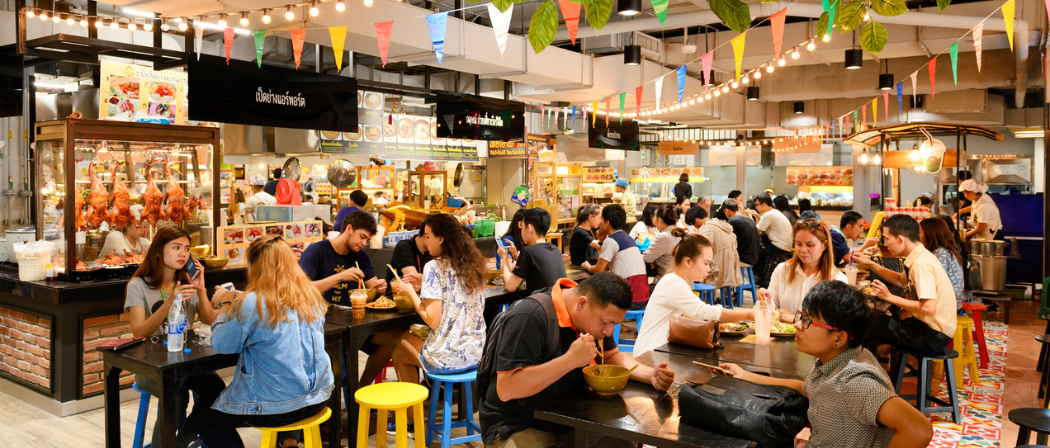
An impressive setting can entice customers through the door. The quality of the food and the experience shared then determine whether they want to return. This was a recurring theme throughout the "Food & Retail" conference, moderated by Monica Cannalire, founder of Younicorn.
Fabien Stutz, Director of Growth and Development at L’Osteria, presented the brand's ambitions. Benjamin Thouverez, Development Director at Big Mamma, shared insights gained from the group's expansion.
In a separate interview, Rodolphe Berthonneau, Development Director for France, Luxembourg and the French Overseas Departments at KFC, outlined the brand's development plans. His insights broadened the discussion on proximity, franchising and new dining occasions.
These discussions highlighted several ways in which dining can become a compelling reason to choose a destination.
An attractive setting draws people in, a great experience brings them back
The rise of visually striking restaurants has reshaped expectations. The setting plays a significant role in the pleasure of dining out. However, Benjamin Thouverez highlighted a return to the fundamentals: the food on the plate, the sincerity of the welcome and the price.
At Big Mamma, design remains a key element of the experience. However, it must support an offering that can stand the test of time, beyond the initial excitement of discovery.
“A beautiful setting attracts people, but they need to come back because the food is good.”
Benjamin Thouverez, Big Mamma
“A beautiful setting attracts people, but they need to come back because the food is good,” Benjamin Thouverez summed up. The lasting impression also depends on the service and the feeling of having paid a fair price.
Fabien Stutz shared this view. The setting enhances the experience, while the food remains a fundamental reason to return.
For retail destinations, this combination matters. A restaurant can contribute to their image and footfall. Its ability to encourage repeat visits then depends on how closely the experience delivered matches the promise made.
L’Osteria: a shared identity, distinctive restaurants
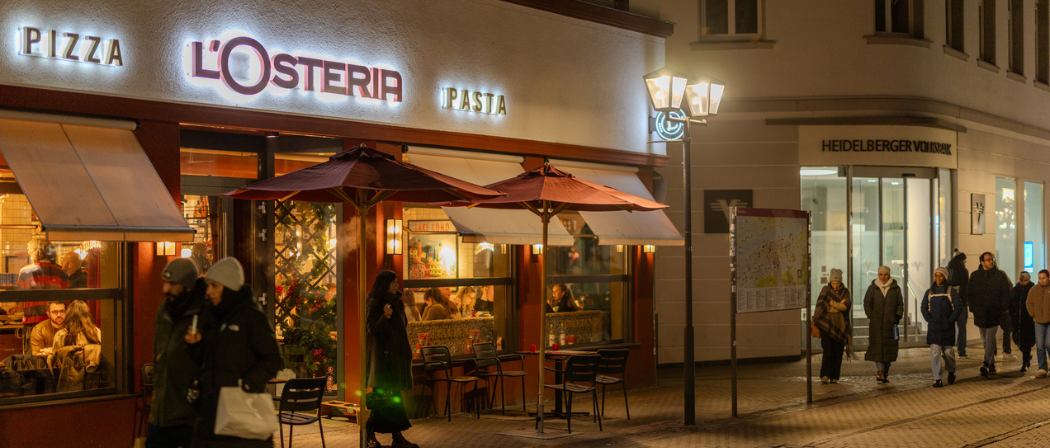
At L’Osteria, choosing a location involves several criteria: footfall, visibility and the potential to become a destination in its own right. The building must also allow the brand's identity to be expressed.
Fabien Stutz emphasised the distinctive character of each location. Materials, lighting and finishes vary from one restaurant to another. This approach makes construction and investment management more complex, but it contributes to the desired customer experience.
Certain elements nevertheless remain consistent. The open kitchen allows customers to watch food being prepared, hear the teams at work and enjoy the aromas. It brings them closer to the food and the craftsmanship behind it.
The bar also plays a central role. It welcomes visitors, encourages interaction and provides a place to enjoy a drink outside mealtimes. This creates additional opportunities for customers to visit.
L’Osteria also maintains a largely consistent menu across its restaurants. Monthly specials introduce seasonal variety. Fabien Stutz nevertheless acknowledged that expansion into new markets would require greater adaptation.
The challenge is to maintain recognisable brand elements while meeting local expectations. Each restaurant must express the brand in its own way.
Accelerating growth without losing brand identity
Growth was a major topic at the conference. L’Osteria and Big Mamma outlined their international ambitions while reaffirming their commitment to the French market.
Fabien Stutz explained that L’Osteria operated approximately 217 restaurants across ten countries at the time of Siec. He identified France as a priority market, supported by its population, tourism appeal and strong food culture.
The brand announced that it was looking for locations in Paris, major cities and eastern France. For 2027, Fabien Stutz outlined plans to open two company-operated restaurants and three franchised locations in France.
This acceleration must preserve service quality and the identity of each restaurant. Property expansion must therefore progress in line with operational capacity.
Benjamin Thouverez described a similar challenge at Big Mamma. He announced continued expansion across Europe, an entry into Austria in 2027 and plans for the United States.
The French market also remains central to the group's search for new locations. Paris, Lyon, Strasbourg and Lille were among the cities being considered.
To support this growth, Big Mamma wants to avoid simply replicating the same concept. Expectations vary from one city to another, even when restaurants operate under the same brand. Menus and atmospheres must therefore be able to evolve.
Maintaining consistent quality depends above all on local teams. Benjamin Thouverez highlighted the difficulty of upholding these standards as the number of restaurants increases across several countries. Trust and the transfer of expertise therefore become essential.
La Felicità: a dining destination connected to neighbourhood life
The conference also explored the social role of dining. Through La Felicità, Big Mamma presented a venue whose uses extend far beyond dining, with roller-skating evenings, concerts, corporate events and the Big Fest food festival.
Food and dining provide a reason to stay and encourage social interaction. The programme of activities, meanwhile, creates specific opportunities for people to come together.
These events also contribute to the working lives of the teams. They bring new projects and fresh opportunities for collaboration around the venue.
This diversity is supported by an integrated operating model. Big Mamma directly operates all the kitchens and food counters at La Felicità. A central management team, shared dishwashing facilities and a production kitchen support their operations.
Benjamin Thouverez described this approach as a way of maintaining consistency across the offering. It also makes it possible to test new recipes, activities and private event formats quickly.
La Felicità therefore serves as a testing ground for the group. Its programme of events and menus evolve in response to the expectations observed on site.
KFC: accelerating growth through local expertise
In his interview, Rodolphe Berthonneau presented a strategy combining network expansion, restaurant modernisation and the development of the brand's offering.
KFC has 408 restaurants in France, all operated under franchise agreements, and more than 16,000 employees across its network. Its long-term ambition is to reach 600 restaurants in France.
This ambition is supported by an established understanding of the market. Rodolphe Berthonneau indicated that more than 200 potential locations had already been identified.
The brand intends to rely primarily on its 52 existing franchisees. Their regional presence, knowledge of local locations and operational experience should help accelerate new openings.
The network brings together entrepreneurs of different sizes. Some operate only a few restaurants, while the largest manage several dozen. This diversity allows projects to be adapted to each partner's capabilities.
Two operating models were presented: traditional franchising and a lease-management arrangement. The latter is designed to reduce the initial investment required for certain projects.
At the time of the interview, the first three openings under this new model were scheduled for the end of the year. The aim is to offer franchisees more opportunities to continue expanding their businesses.
Formats tailored to different consumption habits
Drive-through restaurants remain at the heart of KFC's French business model, accounting for approximately three-quarters of its network.
Rodolphe Berthonneau explained that this format would continue to dominate new openings. Nevertheless, the brand also aims to strengthen its presence in city centres and shopping centres.
It has also identified opportunities in high-traffic locations. Motorway service areas and railway stations were mentioned as potential development priorities, followed by airports.
This diversification responds to different consumption patterns. Motorists, travellers and shopping centre visitors do not necessarily visit restaurants at the same times.
Convenience therefore takes several forms: accessibility by road, a presence along everyday routes or a location within a retail destination.
For KFC, the challenge is to cater to these different dining occasions with suitable formats. The evolution of its network therefore also requires rethinking the experience inside its restaurants.
Product quality and training as the foundations for growth
Rodolphe Berthonneau emphasised the need to support property expansion by focusing on the heart of the offering: chicken.
He specifically described the on-site breading process, which requires dedicated workstations in restaurants. This expertise involves precise techniques and properly trained teams.
KFC wants to raise awareness of this expertise, both through its communications and in its restaurants. Product quality must be clearly understood by consumers, alongside its accessibility.
Value for money is also an important driver of customer acquisition. The brand wants to combine its signature product with offerings capable of appealing to a wider customer base.
The interview also highlighted sourcing practices. Rodolphe Berthonneau notably mentioned a partnership with 700 French poultry farmers, who supply some of the chicken served in the restaurants, with the remainder sourced exclusively from the European Union.
Training is an integral part of supporting restaurant teams: KFC provides dedicated training programmes and tools across its network, complemented by initiatives developed by certain franchisees who operate their own training centres.
This capacity helps train employees, pass on working methods and support career development. It also strengthens the network's local roots.
Growth therefore depends on several interconnected factors: securing suitable locations, engaging entrepreneurs and preparing the teams who will operate the restaurants.
Creating new reasons to visit in the afternoon
KFC also presented an initiative aimed at extending the times when customers visit. Between the busy lunch and dinner periods, the brand wants to develop a range of indulgent cold drinks.
Rodolphe Berthonneau described dedicated areas that would be easy to identify inside restaurants. Their role is to make this new offering visible and encourage different visiting habits, with a rollout planned in France in the near future.
This offering is particularly relevant in city centres and shopping centres. These locations attract visitors throughout the day and can encourage breaks outside traditional mealtimes.
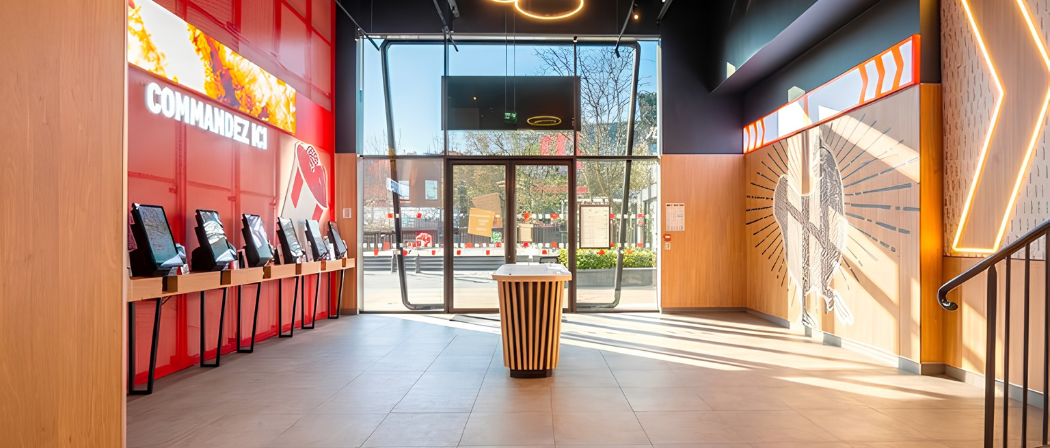
The project forms part of a broader modernisation programme. Visual identity, packaging, signage and restaurant design are also being transformed.
These initiatives reflect a question raised during the conference: how can a single location serve several purposes? At L’Osteria, the bar creates additional reasons to visit. At La Felicità, events shape visitor patterns. KFC is seeking to develop an indulgent break between meals.
Delivery and dining in: adapting the customer promise
The "Food & Retail" conference also explored several perspectives on changing consumer expectations.
Fabien Stutz anticipated closer links between retail and dining. Some brands are already incorporating food offerings to enrich their identity and encourage customers to spend more time on site.
He also envisaged a clearer distinction between takeaway and dining in. For the latter, expectations could become more demanding in terms of setting, service and personalisation.
Delivery presents a particular challenge. It makes it possible to reach more customers, but it is difficult to recreate the full restaurant experience outside the venue.
Fabien Stutz highlighted risks relating to temperature, texture and the conditions in which food is consumed. Developing this channel must therefore preserve perceived quality and the relationship with the brand.
Benjamin Thouverez, meanwhile, identified growing health consciousness as a major shift in food expectations. In his view, this concern is likely to influence both the dishes offered and the information made available to customers.
The origin of ingredients and product quality are therefore becoming integral parts of the experience. How this information is presented should help consumers better understand what they are choosing.
Delivering on the promise at every visit
The conference and the interview with KFC highlighted different business models but shared requirements. Expansion must preserve product quality, the suitability of each location and the ability of teams to deliver on the brand promise.
At the close of the conference, Fabien Stutz identified authenticity as the key word. Benjamin Thouverez advocated an entrepreneurial approach based on listening and adapting.
The insights shared by KFC demonstrated how these challenges apply to a fast-food network. Formats, training, the offering and restaurant design must evolve together to support changing habits.
For retail destinations, dining therefore offers more than an additional service. It can create a reason to visit, extend the hours during which customers come and give a destination its own identity.