
Leisure and retail destinations: a winning combination

“A shopping centre's real competition is people's free time.”
In an interview, Propuls Connect summed up the challenge facing retail destinations in these terms. To attract visitors, they must find their place among the many ways people choose to spend time together.
This shift gives leisure activities a new role. Long regarded as a complement to the retail offering, leisure can now become the starting point of a destination. Restaurants, events and services then enrich the overall experience.
At SIEC 2026, a panel discussion explored the conditions needed for this transformation to succeed. Moderated by Vincent Philippe, Secretary General of SPACE, it brought together Apsys, Nhood and La Boîte aux Enfants. Their discussions focused on programming, relationships between property owners and operators, and the outlook for the sector.
In separate interviews, Sand Fabrik, Sportfield, Propuls Connect and Fever shared their experiences and business models. These insights offered complementary perspectives on the same question: how can the desire to go out be translated into sustained footfall?
Designing a destination around its audiences
The panel discussion highlighted a shift in the way retail destinations are designed. Leisure activities can now shape the identity of a destination, influence its opening hours and determine the services provided alongside them.
Nhood emphasised the importance of starting with the site itself, its neighbourhood and local habits. Residents' needs, city events and businesses' expectations then help shape the programme of activities.
This approach requires considering how spaces are used at different times. An activity may welcome corporate groups during the week, birthday celebrations in the evening and families at weekends. This diversity of audiences helps keep a destination lively beyond a few peak periods.
Apsys illustrated this approach with Boom Boom Villette, located in the 19th arrondissement of Paris. The destination combines restaurants, several leisure concepts and a programme of events.
Designing a destination around its audiences
The panel discussion highlighted a shift in the way retail destinations are designed. Leisure activities can now shape a destination, influence its opening hours and determine the services provided alongside them.
Nhood emphasised the importance of starting with the site itself, its neighbourhood and local habits. Residents' needs, city events and businesses' expectations then help shape the programme of activities.
This approach requires considering how spaces are used at different times. An activity may welcome corporate groups during the week, birthday celebrations in the evening and families at weekends. This diversity of audiences helps keep a destination lively beyond a few peak periods.
Apsys illustrated this approach with Boom Boom Villette, located in the 19th arrondissement of Paris. The destination combines restaurants, several leisure concepts and a programme of events.
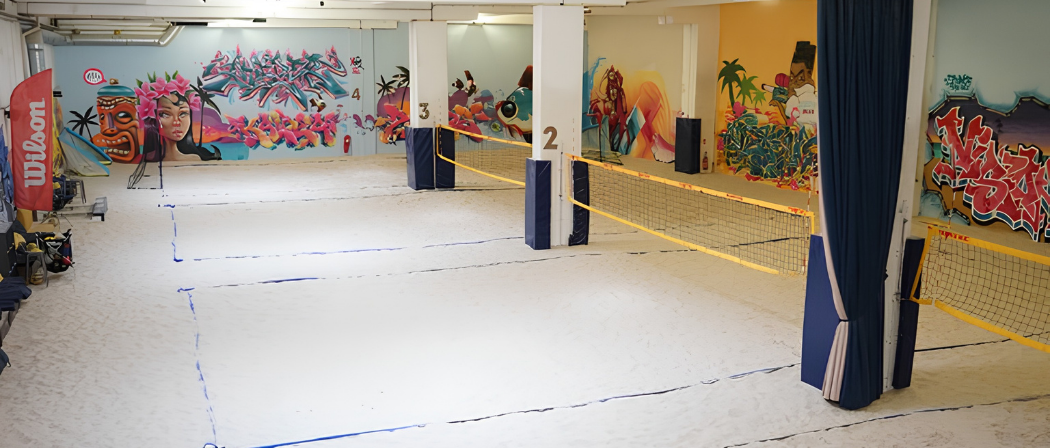
The variety of activities makes it possible to welcome different types of customers throughout the week. Universities and associations use certain regular time slots. Corporate groups visit during the day, before individual visitors arrive in the evening. Families particularly visit the venue on Wednesdays and at weekends.
The team described how visitors frequently move from one type of use to another. A parent discovers the venue during a birthday party, then returns with friends. One of those friends may subsequently suggest organising a corporate event there.
Sand Fabrik hosts between 250 and 300 seminars a year. Breakfast, conferences, workshops, meals and activities can all take place at the same venue. This seamless experience is one of the key attractions of its offering.
The interview also highlighted the difficulties encountered in the early stages. The founders faced eleven bank rejections before securing joint financing from two institutions. Support from Réseau Entreprendre helped them strengthen their project.
During the interview, Sand Fabrik announced that it was looking for premises in France's ten largest metropolitan areas. Its experience demonstrates the value of programming capable of bringing a venue to life at different times.
Sportfield: bringing available spaces back into use
The transformation of retail destinations often takes place over a long period. During planning studies, administrative procedures or construction work, some spaces remain available.
During the panel discussion, Nhood identified this transitional period as an important programming opportunity. Temporary uses can maintain activity and support a site's transformation.
The model presented by Sportfield in a separate interview offers a practical response to this challenge. The company installs removable sports facilities in underused car parks, brownfield sites and land awaiting redevelopment.
It manages the project, its financing, operations and the subsequent removal of the facilities. Platforms allow installations to be adapted to the terrain. Acoustic solutions can also be incorporated when facilities are located near residential properties.
Access is based on a simple system: online booking, receipt of an access code and independent entry. The provision of equipment also makes participation easier, particularly after work.
Sportfield favours small-scale facilities located close to users. The choice of activity depends on the available space, potential customers and nearby facilities.
The company also emphasised its desire to become part of local community life. It focuses its offering on sport, while surrounding cafés and restaurants can welcome players after their games.
According to the information provided, 20 to 30% of time slots are made available to schools, associations and public groups. Temporary occupation therefore combines economic activity, sporting opportunities and accessibility for different audiences.
Propuls Connect: creating a reason to visit
A permanent activity can establish regular habits. A one-off event, meanwhile, can encourage people to discover a destination or give them a reason to return.
Propuls Connect has developed this approach. The company designs events and activities for the marketing teams of retail destinations. Games, social interaction and emotional engagement are intended to provide an additional reason to visit.
Licensing is one of its key tools. Fort Boyard, Koh-Lanta and Monopoly offer familiar worlds that visitors can experience in a physical setting.
Other initiatives draw on current cultural trends, such as the Stranger Things tour organised in more than forty cities. Visitors were able to experience this world free of charge in their local shopping centre.
The company emphasised the importance of accessibility. Organising an experience in Brest, Nîmes or Dijon brings these opportunities closer to local audiences.
It is worth noting that licensed experiences account for approximately 35% of its business. Most projects are original creations, tailored to clients' objectives and budgets.
With concepts such as Secret Box and Piggy Bank, Propuls Connect combines surprise, participation and benefits for visitors. The aim is to create a memorable experience associated with the destination, encouraging people to return.
The company also discussed its initial collaborations with local authorities. It aims to adapt the expertise developed in shopping centres to city-centre environments.
Fever: helping experiences find their audience
The attractiveness of a concept also depends on its visibility and how easy it is to book. In its interview, Fever presented a model combining discovery, ticketing and marketing support.
The platform helps organisers market their experiences. It provides booking tools and communication resources, and can subsequently support their development.
Fever also draws on its local media outlets, including Paris Secret. These help identify trends and raise awareness of events.
The company also creates its own formats, such as Candlelight concerts, performed by candlelight. At the same time, it works with partners offering immersive exhibitions, illuminated trails and leisure activities.
The length of time an experience operates at a location varies according to the concept. During the interview, Fever explained that installations are generally planned to run for at least four to six months. Some can be extended when visitor numbers justify it.
Support can also cover new openings and the search for financing solutions. The aim is then to enable a concept to expand into several cities.
Digital technology helps bring people together in physical spaces. It enables audiences to discover and book an experience, while the experience itself takes place at a real-world venue.
Bringing leisure activities to life beyond their own spaces
The panel discussion also highlighted an area for improvement: creating stronger connections between leisure activities and the wider programme of events across a destination.
Apsys observed that some leisure attractions remain relatively invisible from communal areas. Their enclosed frontages preserve the immersive atmosphere but limit opportunities for spontaneous discovery.
Demonstrations or occasional events can provide a better glimpse of what happens inside. They also help bring the entire destination to life.
La Boîte aux Enfants, for its part, called for better coordination between the events organised by leisure parks and shopping centres. Joint programming would help bring together initiatives that are still sometimes managed separately.
Nhood stressed that this cooperation must begin at the planning stage. Communication becomes more effective when the programme clearly responds to the expectations of different audiences.
Local partners can then help promote it. City events, businesses and neighbourhood organisations can all become valuable communication channels.
Maintaining economic viability and a high-quality experience
The growth of leisure activities also requires a better understanding of operational constraints.
During the panel discussion, Gaëtan Le Jariel, from La Boîte aux Enfants, pointed out that leisure parks require large floor areas. Their turnover levels differ from those of traditional retailers. Rental costs must reflect this reality.
He also warned against the proliferation of almost identical offerings in the same area. Several complementary leisure activities can strengthen a destination. However, concepts targeting the same children at the same times risk undermining each other's visitor numbers.
The quality of the family experience is another key consideration, particularly the need to ensure that parents enjoy their visit as much as their children.
Attention to accompanying adults, comfort and the quality of the welcome therefore play an important role in encouraging repeat visits. The originality of a concept must be matched by the quality of its day-to-day operations.
Renewal also requires resources. New content, activities and events can maintain visitor interest, provided the site's economic viability is preserved.
Creating reasons to return
The panel discussion and interviews demonstrated the many ways leisure activities can contribute to retail destinations. They can create a destination, reactivate an unused space, encourage discovery or establish new habits.
Their success depends on mutually reinforcing choices: understanding audiences, developing complementary offerings and adapting operating conditions. It also requires ongoing cooperation between property owners, operators, retailers and local stakeholders.
An initial visit may be sparked by curiosity. Subsequent visits depend on the quality of the experience and the new opportunities on offer.
It is through this continuity that leisure activities realise their full potential. They give visitors a reason to choose a destination and, ultimately, to make it part of their regular habits.